Magnum Silencium
When I began my studies for the priesthood in September 1969 at the age of 18, one house rule was the “Magnum Silencium.” After night prayer, we couldn’t speak and stayed in our rooms until morning prayer the next day. This “great silence” was meant to offer a period of profound quiet and reflection. It helped us focus on God, rest our minds and aid the transition from daily work to deep prayer.
This rule reminded me of the words from this weekend’s first reading. Elijah had gone to the mountain of God – Horeb – to encounter Him. Standing at the cave’s entrance, the LORD passed by, a great wind tore mountains and broke rocks before Him, yet the LORD wasn’t in the wind. An earthquake followed, but the LORD wasn’t in it. A fire came, but the LORD wasn’t in that either. Finally, a low whisper. Elijah wrapped his face in his cloak and went out to the cave’s entrance. God wasn’t in any of the loud destructive forces. Instead, God revealed Himself in what’s traditionally translated as “a still small voice” or “a gentle whisper”. In Hebrew, it’s “qol demamah daqqah” – a voice of thin silence. Ultimately, God called Elijah to recognise Him not only in the mighty signs of wind, earthquake and fire, but in the mystical theophany of the “still small voice.”
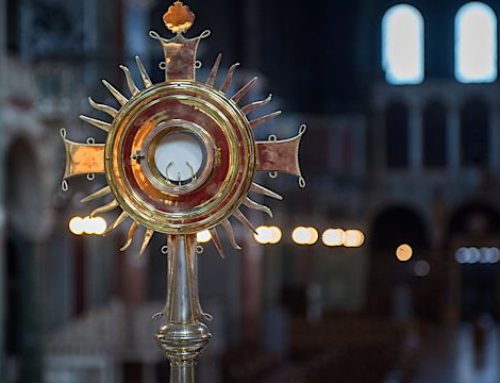
I think it’s helpful to see prayer as sitting still before the Divine Presence. One of my favourite authors, Fr Michael Casey OCSO, says that excessive speaking (multiloquium), inner noise, in prayer prevents the experience of compunction, from which contemplation arises. Creating silence in our lives requires discipline, time and attention. But it’s golden. To truly encounter God, we must carve out genuine silence in our schedules.
Lord, please send your Holy Spirit to still my heart and mind so I can be silent before you. Guide me like
Elijah, teaching me to wait for your quiet, small voice. Replace my restlessness with inner calm and help
me, like Mary, to ponder these things deeply in my heart. Amen.