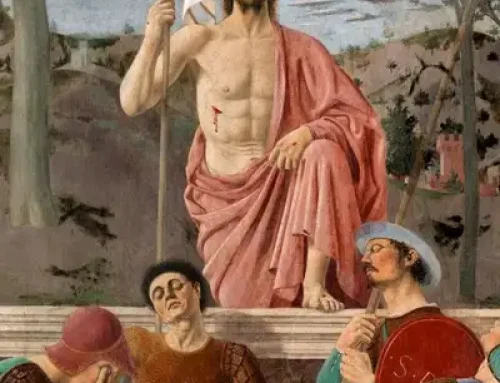
The Blessed Assumption
This Friday I will be travelling with a group from the parish to Lourdes, France, on pilgrimage. We will be staying at Hosanna House, run by HCPT Pilgrimage Trust, which is a few miles outside the town in the village of Batres.
Our date of departure (15th August) is the Feast of the Assumption of Our Lady and is a Holy Day of Obligation. Although this doctrine of the Assumption has been part of church teaching for many centuries, it was not defined until 1950 by Pius XII as a truth of divine relation: ‘The Immaculate Mother of God, the ever-Virgin Mary, having completed the course of her earthly life, was assumed body and soul into heavenly glory.’ It is important to note that, unlike with Jesus her son, Church teaching does not use the terms ‘resurrection’ or ‘ascension’ to define or describe the ‘assumption’ of Mary. She was not ‘raised from the dead’ or ‘brought back to life’ on earth, nor did she ‘ascend into heaven by her own power’. Mary was ‘assumed into heaven, body and soul’ by God at the end of her earthly life.
So, did Mary actually die? Neither the Scriptures nor Church tradition, nor even Pope Pius XII’s declaration, explicitly answers that question. Throughout the centuries, however, most saints and Catholic theologians believed that she did in fact die, but not as a result of any original or human sin — from which she was uniquely spared — but in conformity with the experience of her son, Jesus, who died. Pope St. John Paul II explained: ‘Since Christ died, it would be difficult to maintain the contrary for his mother.….the mother is not superior to the son who underwent death.’ [General Audience, June 25, 1997, 2-3]
Mary’s Assumption anticipates our own ultimate union with Christ. The Catechism of the Catholic Church states: ‘The Immaculate Virgin, preserved free from all stain of original sin, when the course of her earthly life was finished, was taken up body and soul into heavenly glory, and exalted by the Lord as Queen over all things, so that she might be the more fully conformed to her Son, the Lord of Lords and conqueror of sin and death’ [CCC, 508]. ‘The Assumption of the Blessed Virgin is a singular participation in her Son’s Resurrection and an anticipation of the resurrection of other Christians’ [CCC, 966].
As I stand at the grotto, in Lourdes next week, where Mary was said to have appeared to Bernadette, I will be praying for you all, asking Mary to help us always listen to the words of her Son — just as, in the last words of Mary recorded in Scripture, she said at the marriage feast of Cana, Do whatever he tells you.